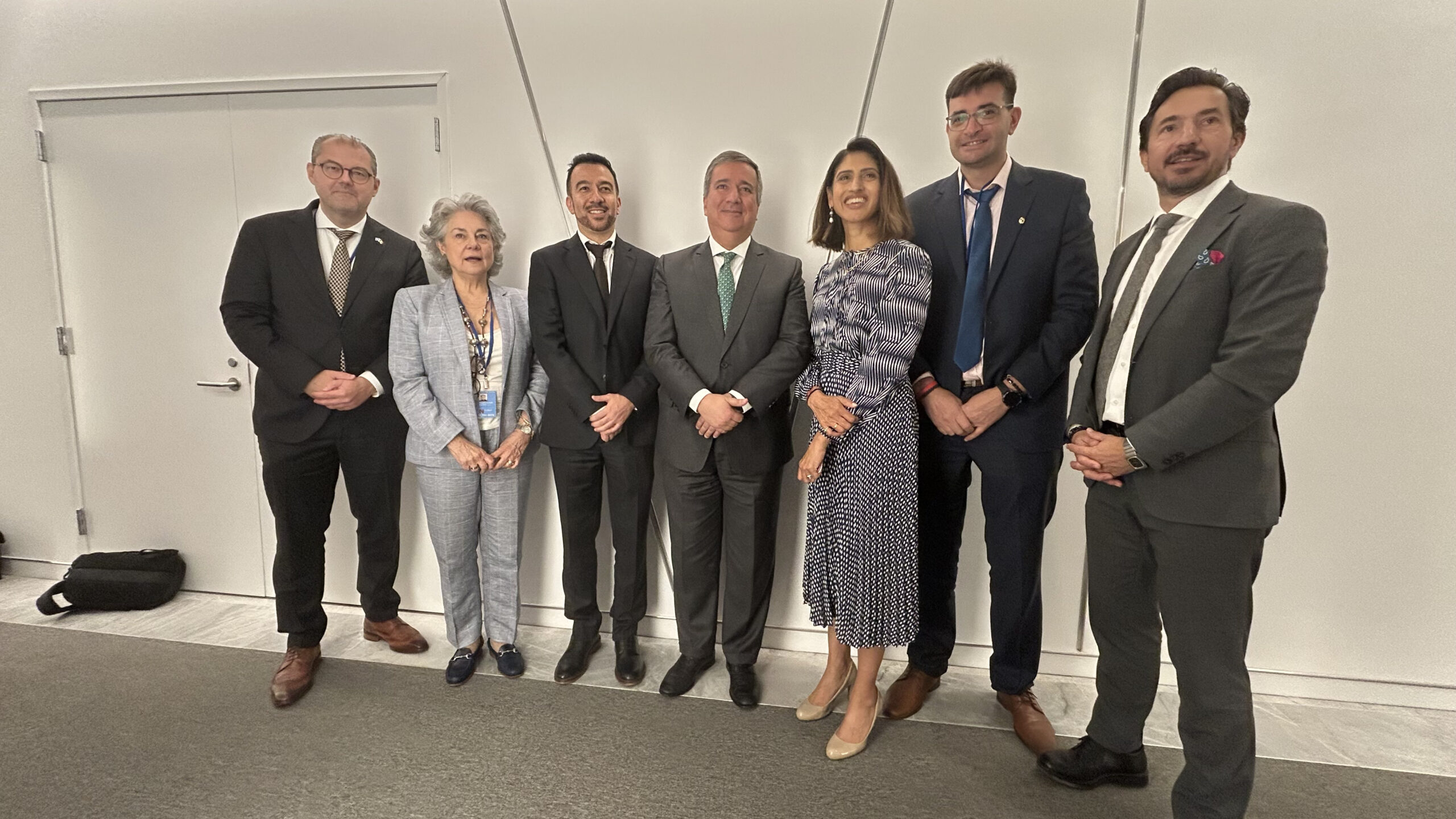
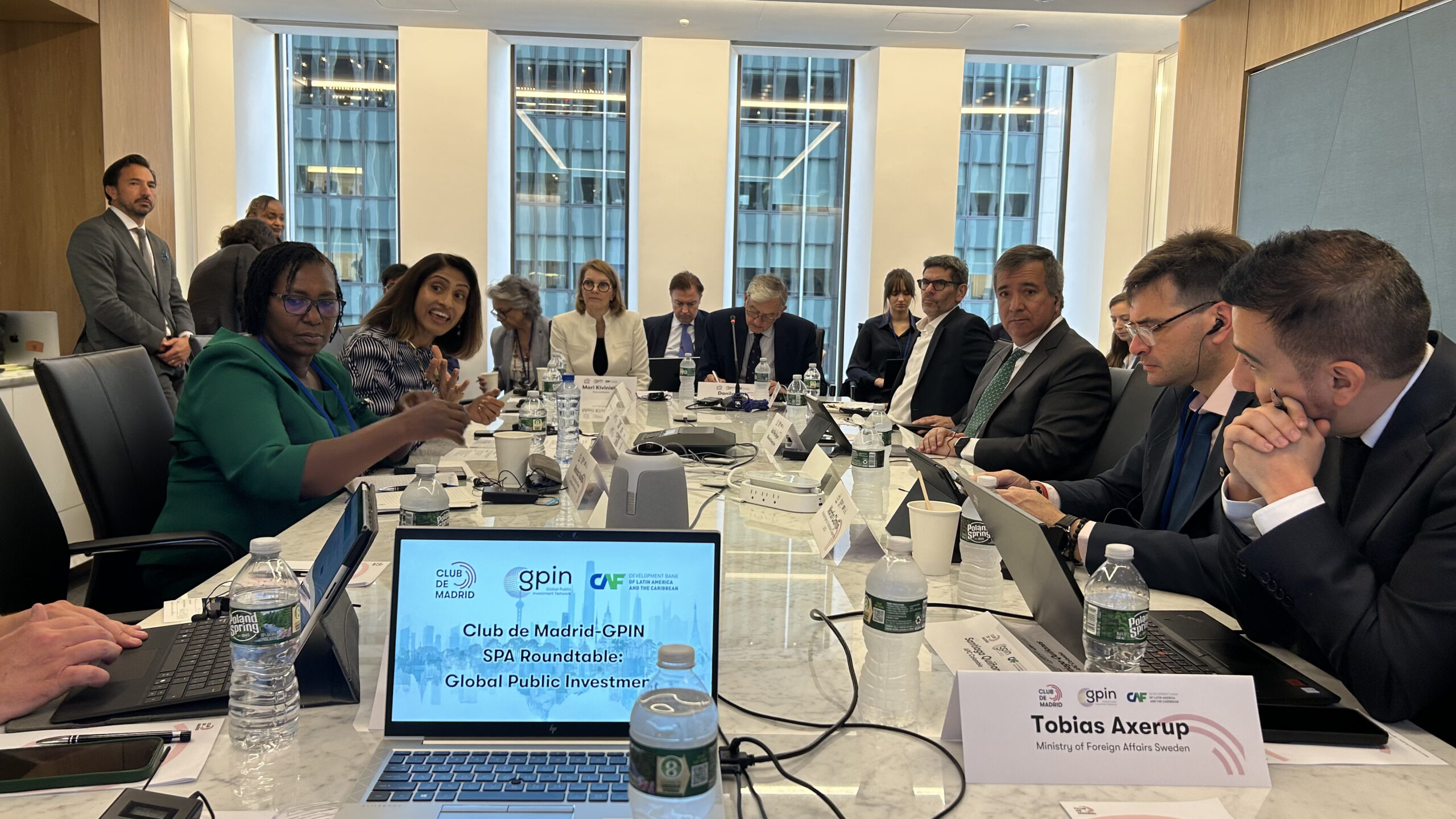
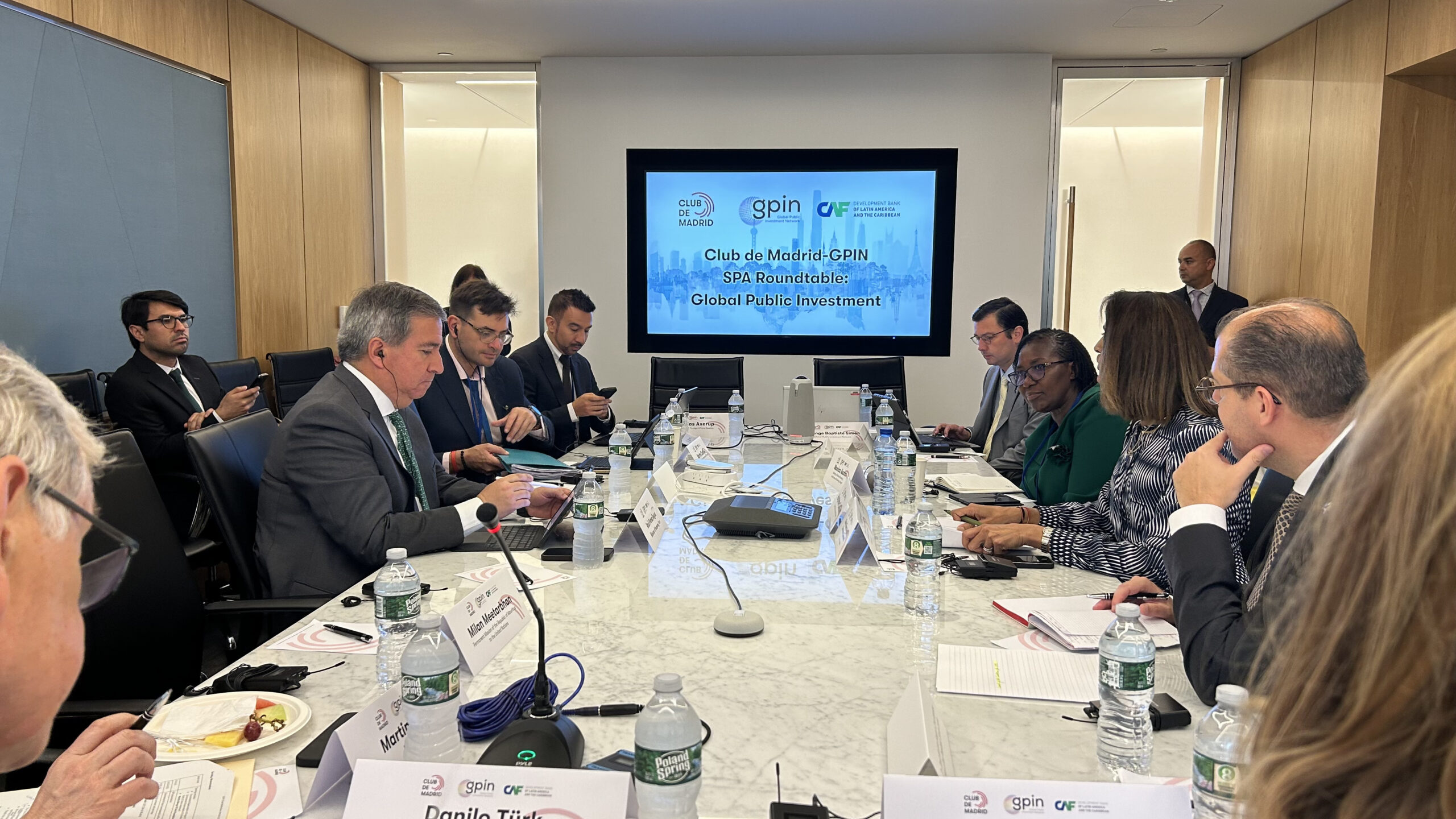
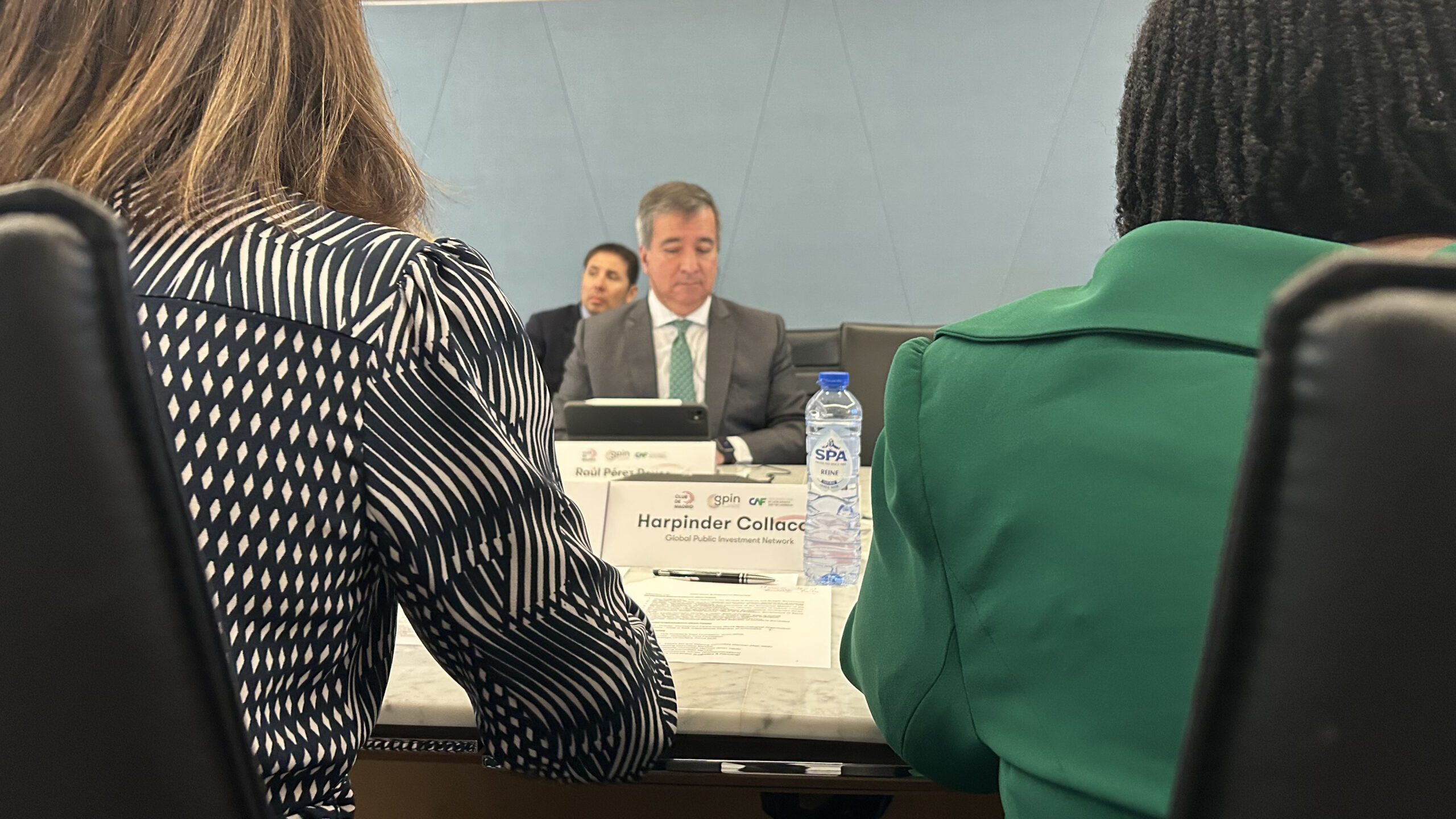
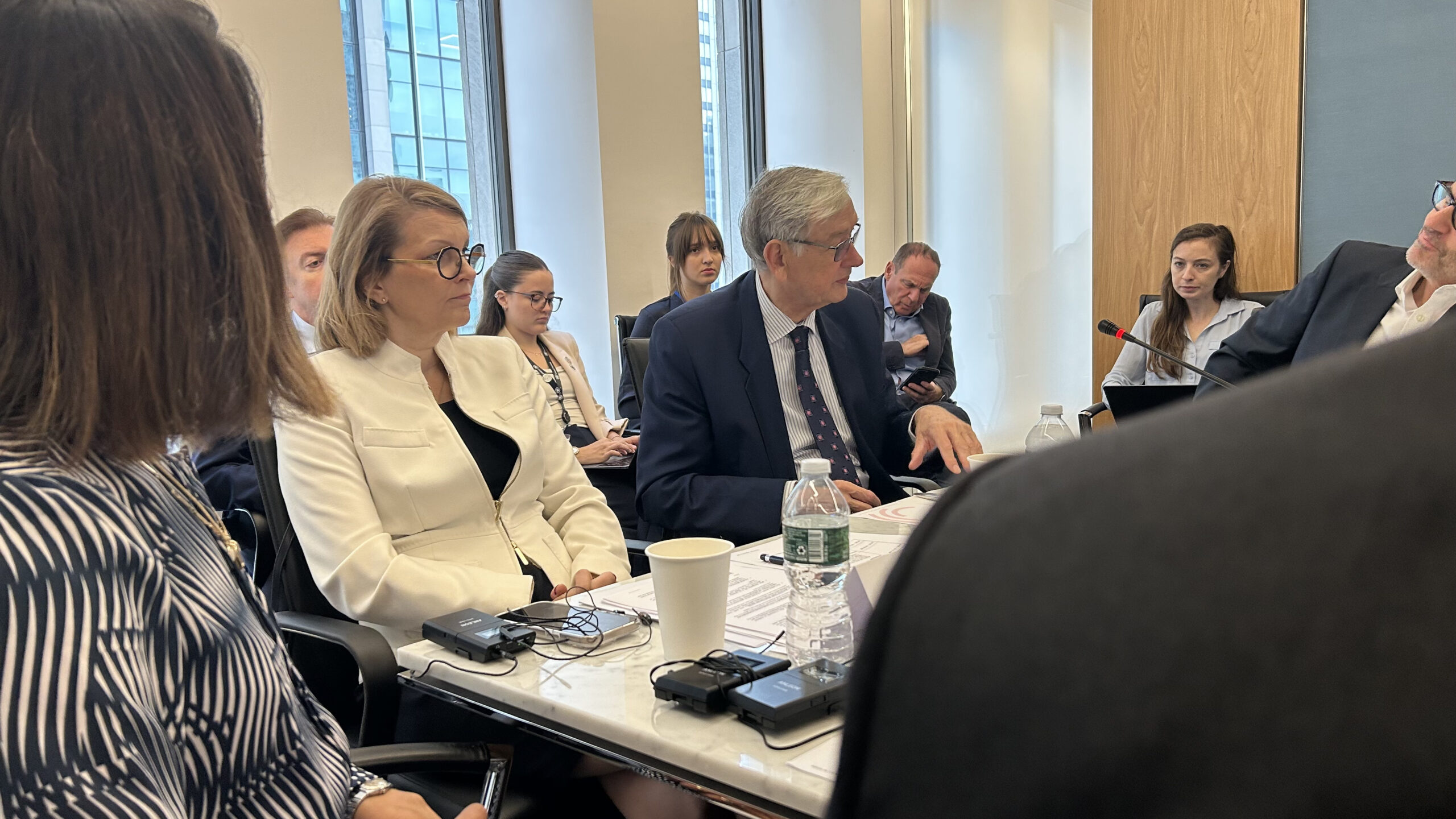
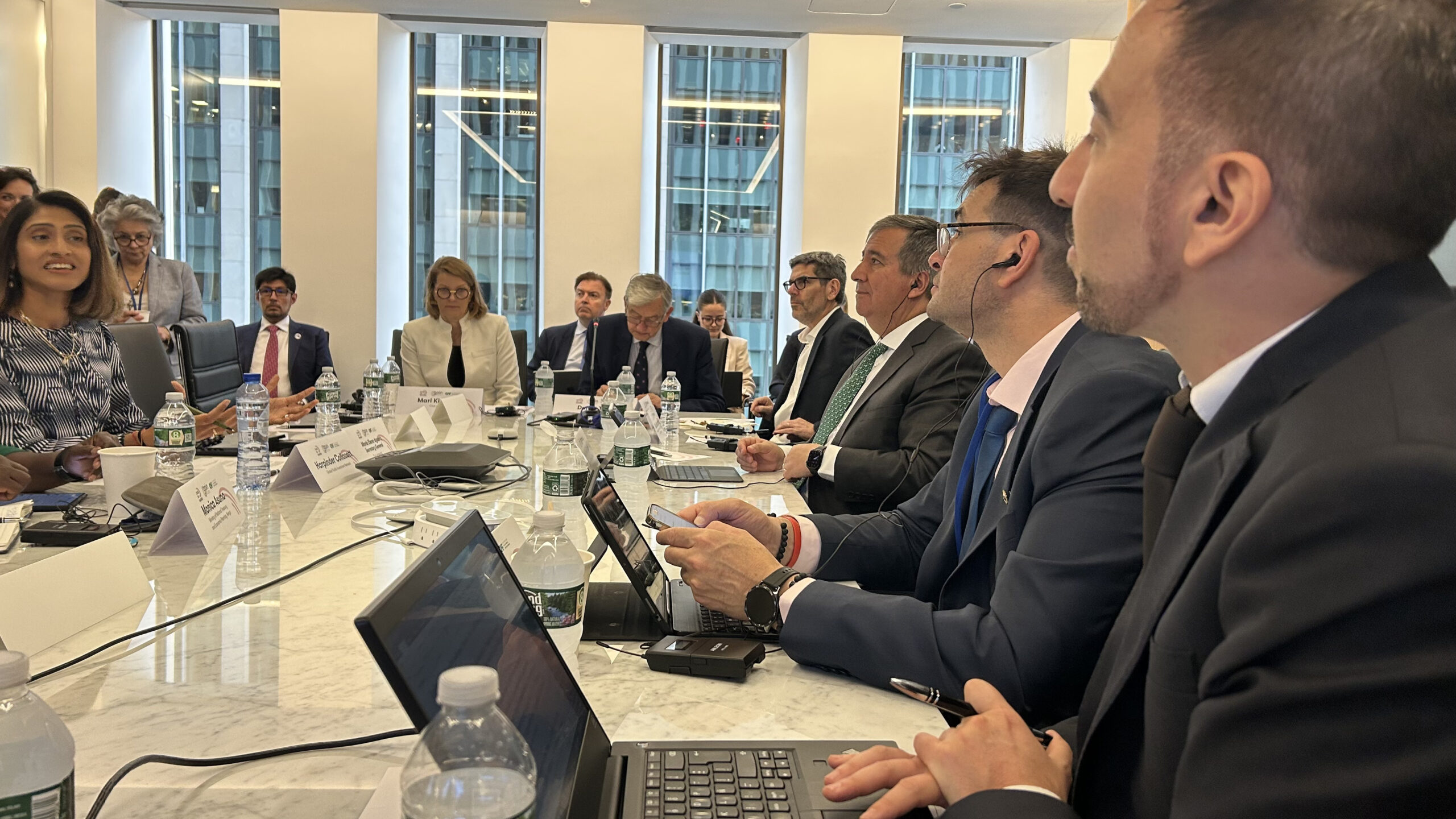
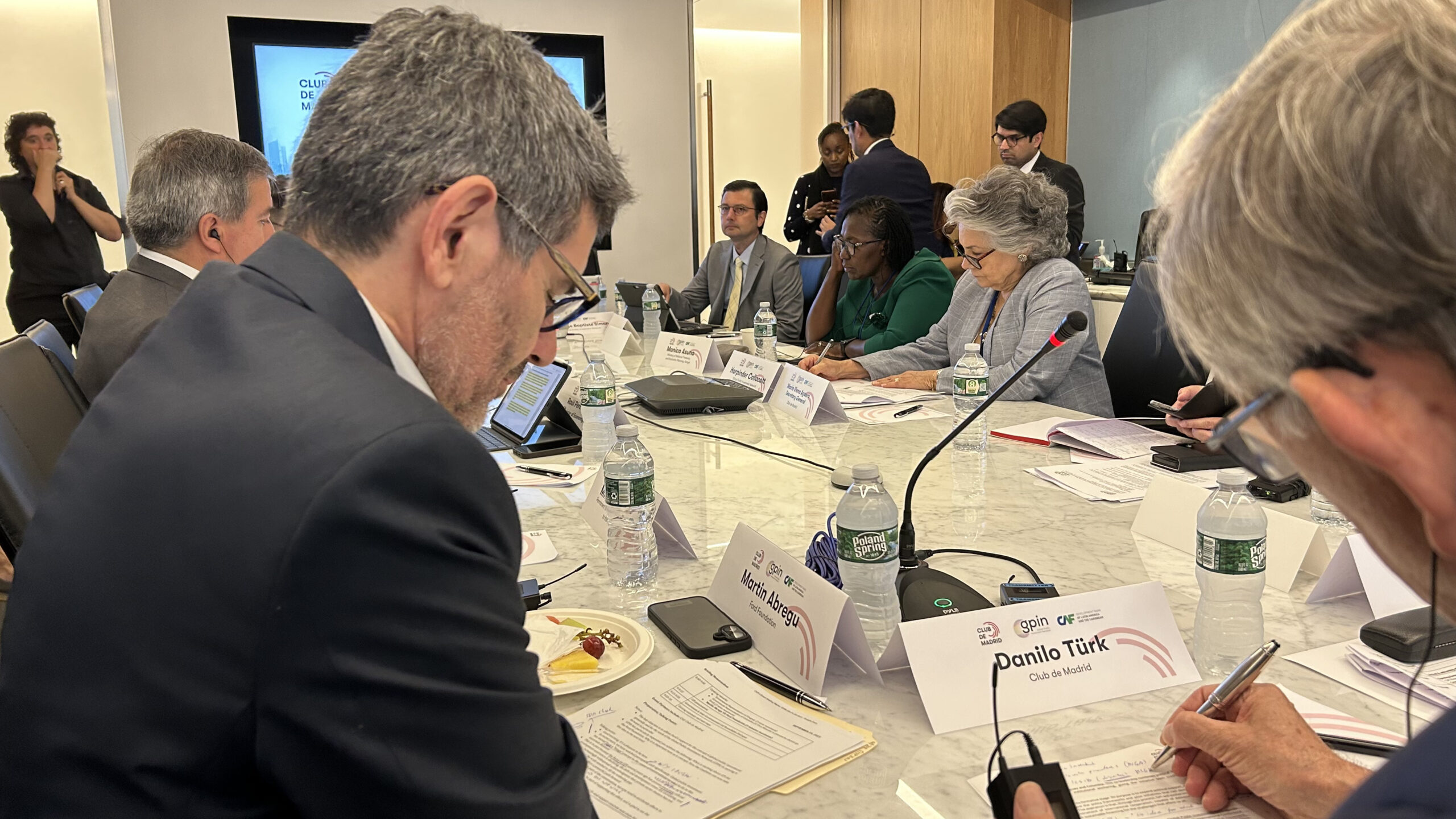
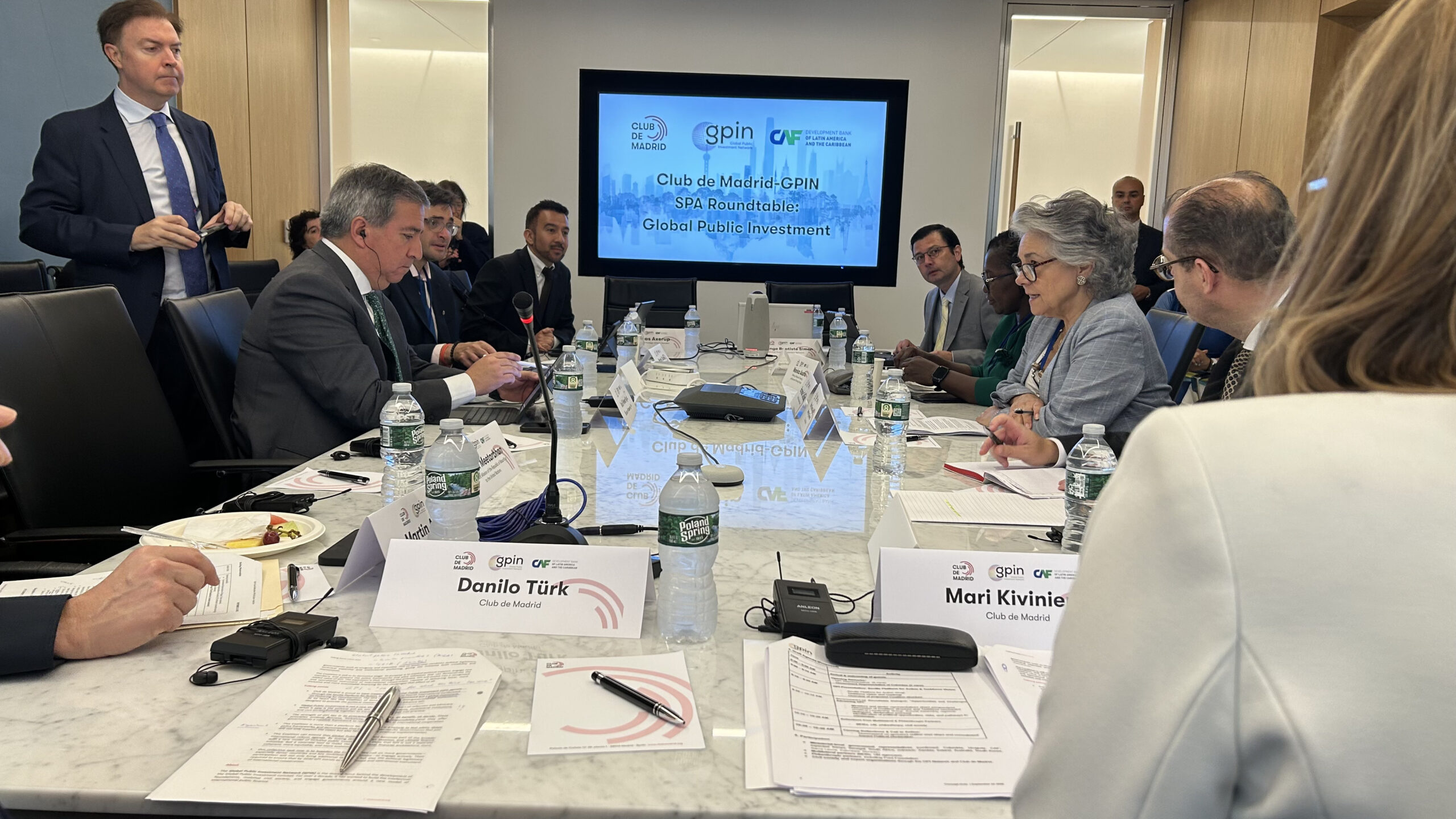
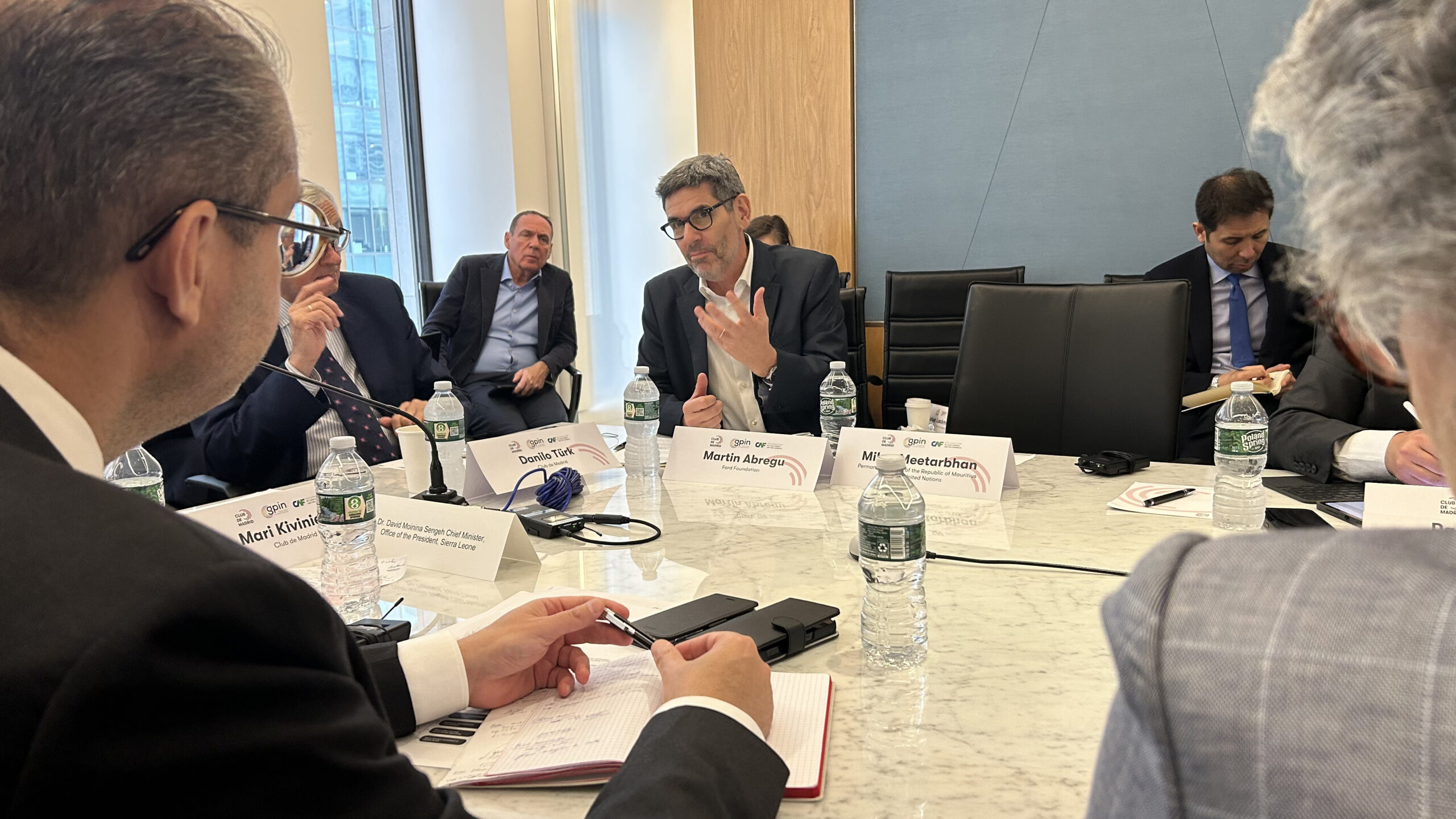
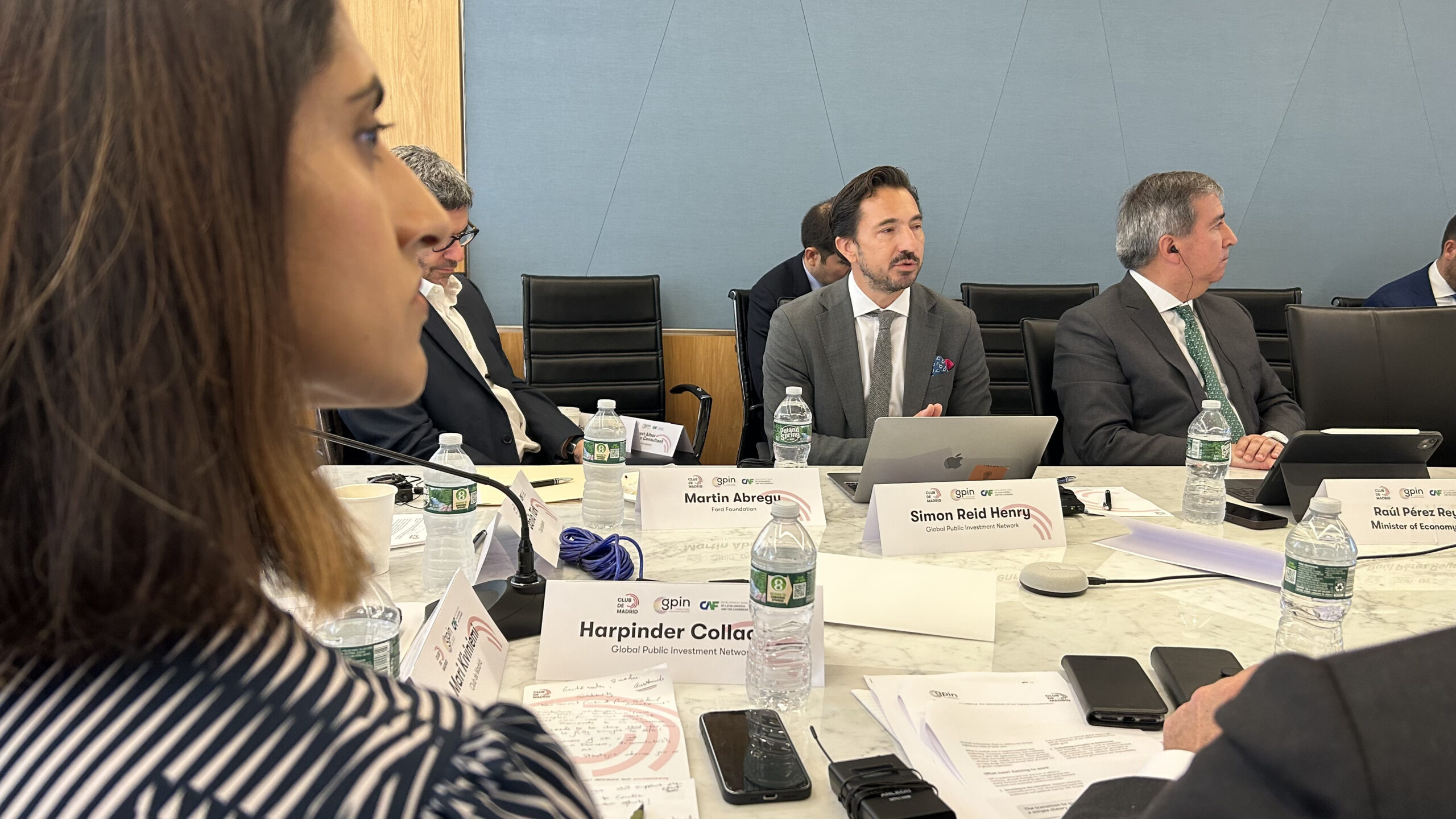
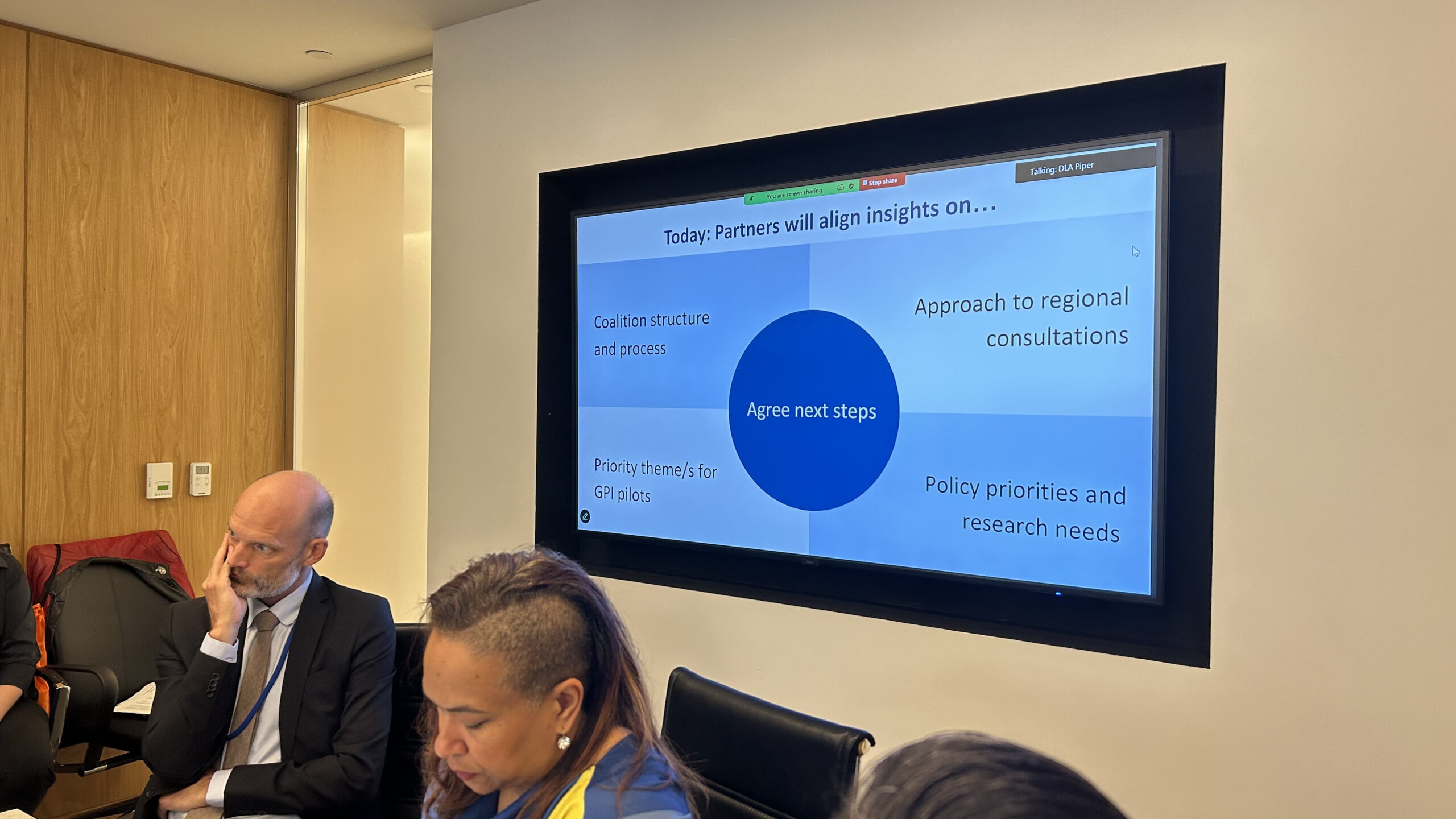
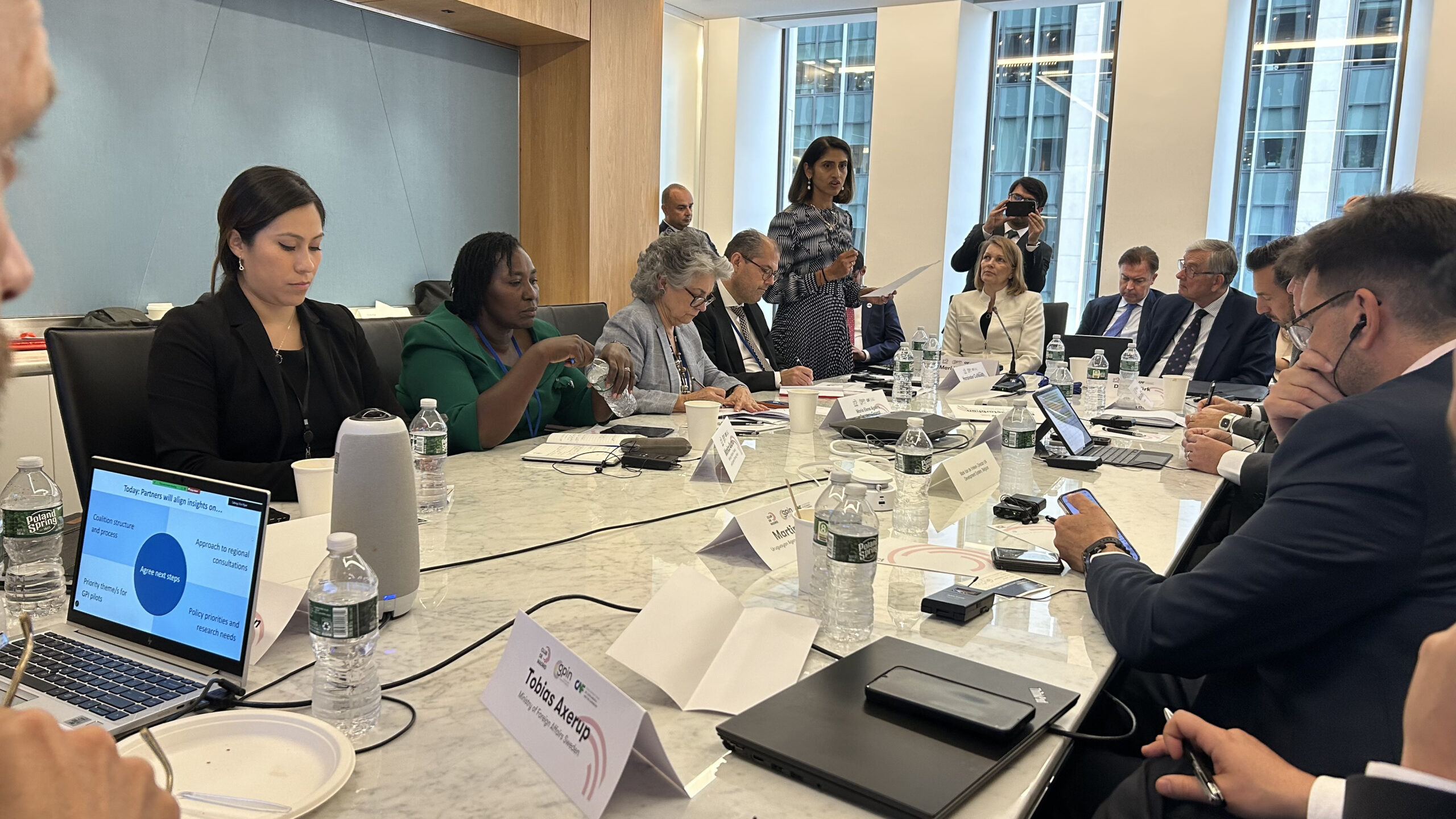
Governments meeting in New York have initiated discussions on how to implement global public investment.
In July this year, a commitment to advancing global public investment was included in the Financing for Development Conference’s Sevilla Platform for Action. Today’s meeting, on the sidelines of the United Nations General Assembly, marked the beginning of regular convenings by governments and international institutions to explore how to implement Global Public Investment as a new framework for global financing.
The convening was initiated by the Government of Uruguay, the Development Bank of Latin America and the Caribbean (CAF), and Club de Madrid, the world’s largest forum of democratic former Presidents and Prime Ministers. The process is supported by the Global Public Investment Network which brings together the insights of hundreds of organisations and leading experts on how the approach can be put into practice. A diverse group of governments from across continents took part, building broad representativity and political ownership.
Global public investment applies the principles of everyone benefits, everyone contributes according to their means, and everyone decides together. From this cooperative approach, all benefit.
Over a dozen governments took part, with over a dozen more already interested in connecting with the process going forward. Regular convenings will take place across 2025, 2026, and 2027. The governments will work with civil society and international institutions to pilot and scale a framework for global public investment, through regional dialogues, policy research, and pilot projects. This inclusive approach will ensure that implementation reflects the requirements of international cooperation in the 21st century.
The work will showcase practical mechanisms for shared governance, fair contribution frameworks, and equitable benefit-sharing—ensuring all countries have both a voice and a stake in solving global challenges. It will explore the application of this approach to a range of common priority areas, including biodiversity protection, pandemic preparedness, and the energy transition.
By delivering a proof of concept, the aim is to embed global public investment within the global financial architecture by 2028.
Martin Clavijo, Executive Director of the Agency for International Cooperation of Uruguay, said: “Global public investment will help revitalise multilateralism, reshape international cooperation, and renew the social contract. It is a major step forward that the planning of the implementation of global public investment has now begun. No one country has all the answers – but collectively we will get there. We invite more partners to join in this effort to build a safe, fair, sustainable world – together.”
María Elena Agüero, Secretary General of Club de Madrid, said: “The energy shown by governments at the inaugural planning meeting showed how much the momentum for global public investment has accelerated. In a time of polycrises, building a new international architecture based around global public investment is necessary, urgent, feasible, and widely supported.”
Harpinder Collacott, Executive Director of the Global Public Investment Network, said: “These pioneering governments are showing political leadership and vision at a time when the world needs good ideas which can respond to greatest challenges of our time. Global public investment has moved from being a good idea to a real policy option. These leaders are coming together to build a new future which can become a reality by 2028.”
Research, background and the latest news on global public investment and Club de Madrid is available at https://globalpublicinvestment.net/ and https://clubmadrid.org/