
Official Visuals
Engaged Members’ Social Media Assets


Case Studies
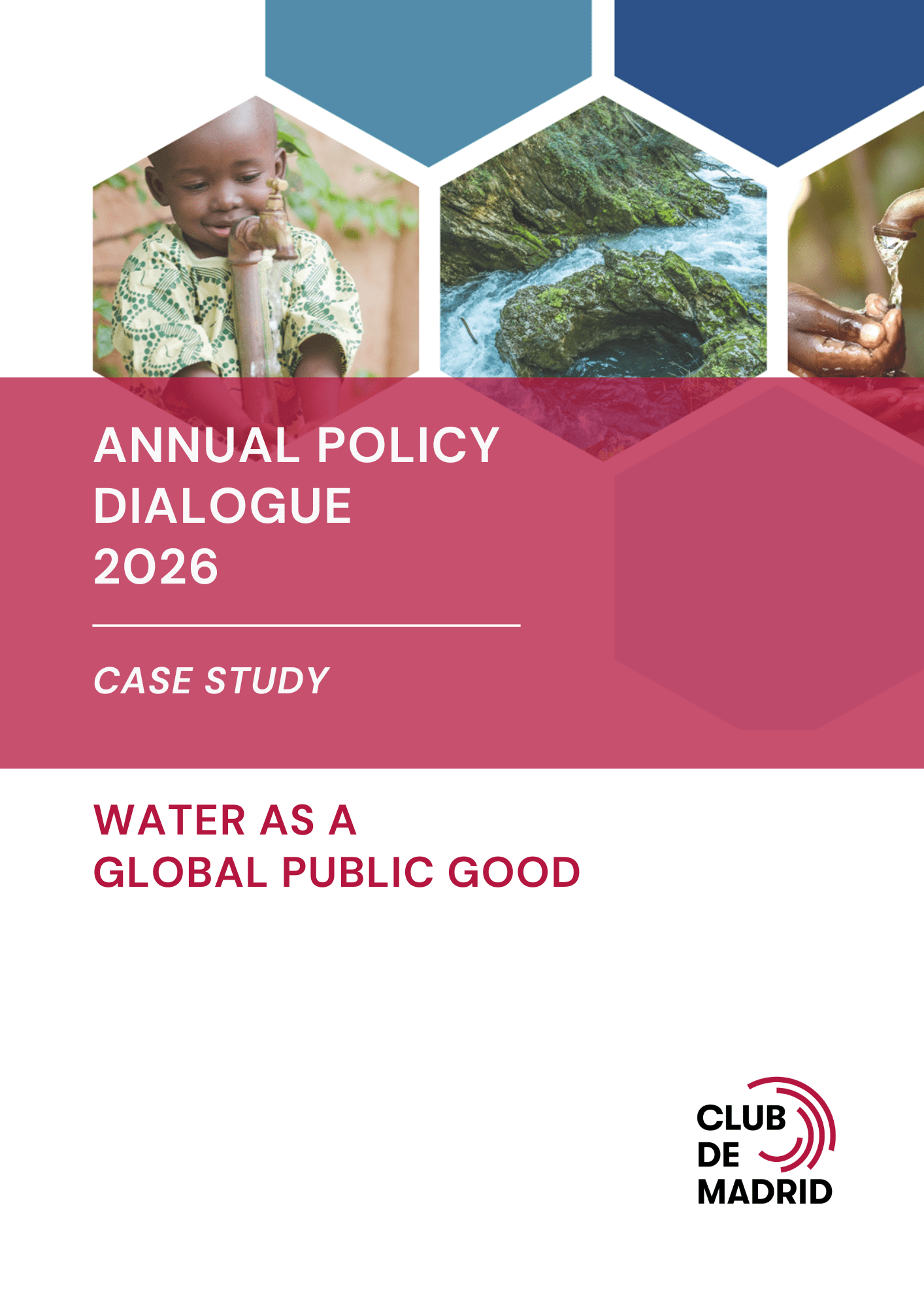
Water as a Global Public Good
Annual Policy Dialogue 2026
The 2026 Case Study “Water as a Global Public Good” examines water security as a critical global challenge that extends beyond issues of scarcity, infrastructure, and finance to encompass governance, accountability, and international cooperation. It argues that while water itself is not a pure global public good, the systems that support water security—such as monitoring, data sharing, transboundary cooperation, pollution control, and climate-resilient planning—generate shared benefits across communities, countries, and generations. Using water as a practical test case, the paper proposes a functional approach to governing and financing these public-good functions, strengthening existing institutions and ensuring that global commitments translate into safe, affordable, and reliable water services for all.
Governing Digital Public Goods
Annual Policy Dialogue 2026
The 2026 Case Study “Governance of Global Digital Public Goods for Digital Public Goods for Digital Public Infrastructure” examines the governance of digital public goods and digital public infrastructure as a central challenge for democracy, sovereignty, development, and international cooperation. Data—not openness or technical standards alone—is the foundational public good of the digital economy, while interoperability and open standards are governance mechanisms needed to prevent its private enclosure and concentration in dominant technology platforms. The paper proposes moving beyond technical, stack-based solutions toward democratically accountable institutions that build trust, protect rights, strengthen sovereign agency, and ensure sustainable public financing. Regional approaches, particularly shared infrastructure, policy frameworks, and regulatory capacity in the Global South, may offer the most viable pathway for translating digital public goods into inclusive public value and resilient public services.
Global Public Health as a Global Public Good
Annual Policy Dialogue 2026
The 2026 Case Study “Global Public Health as a Global Public Good” examines the growing gap between global health commitments and health outcomes, highlighting how the COVID-19 pandemic, vaccine inequities, institutional mistrust, and fragmented governance have exposed weaknesses in coordination, financing, and accountability. It proposes a pragmatic, multi-level approach to global health governance that strengthens regional institutions, aligns financing with public goods provision, and fosters greater accountability. Through a focus on maternal, newborn, and child health indicators, the paper argues for moving from rhetorical solidarity to operational solidarity, ensuring that global public health is governed as a shared responsibility and delivered as sustained public value.
Other Documents
Breaking the gridlock
Remaining cooperation in a polarized world
The 2023/2024 United Nations Development Programme Human Development Report, “Breaking the Gridlock: Reimagining Cooperation in a Polarized World,” addresses the dangerous immobilization caused by uneven development, intense inequality, and political polarization. It proposes navigating this impasse through renewed multilateralism, investing in global public goods, and utilizing deliberative democracy to foster inclusive, effective cooperation.
Global Public Goods: International Cooperation in the 21st Century
The concept of Global Public Goods (GPGs) gained prominence through a key 1999 United Nations Development Programme (UNDP) publication.
Going South? Leadership on Global Public Goods
Munich Security Conference
By Sophie Eisentraut.
Financing and Providing Global Public Goods
Expectations and Prospects
By Francisco Sagasti and Keith Bezanson
Private Sector Capital Engagement in Development Financing
Version 7
Mobilizing private sector capital for development—particularly through blended finance, guarantees, and innovative instruments such as thematic bonds and microbonds—has become essential to address the widening SDG financing gap in a context of declining official development assistance and fragmented global cooperation. The framework emphasizes a shift from aid to investment, where public, philanthropic, and multilateral actors play a catalytic role in de-risking and crowding in private investment. Delivering sustainable and inclusive growth will depend on building integrated financing ecosystems, strengthening local capital markets, and aligning incentives across stakeholders to transform private capital into a core driver of development impact, resilience, and economic transformation.