The main focus of the mission was to take part in the Myanmar Good Governance Forum a joint initiative of the Government of Myanmar and UNDP which took place on February 23-25, in Nay Pyi Taw. The Good Governance Forum focused on looking beyond the national reforms initiated, reflecting specifically on the progress on the decentralization process and local governance reform. As a highlight, the reports and results on the State of Local Governance was launched during the Forum. The attendees included both national actors (Union, State/ Regions and township level) and international actors from national/local government, administration, parliaments, academia and research, CSOs, private organizations and the UN system.
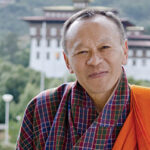
Prime Minister Thinley was the key note speaker in one session of the Myanmar Good Governance Forum. Thinley shared good practices and lessons from bringing services effectively to the people in Bhutan.
He stated that “we were very clear about determining the values we needed to achieve – cultural, social, economic, ecological and political – to which every Bhutanese could subscribe regardless of ethnicity, region, religion or culture. We realized that one primary reason for the problems faced by many countries is their failure to set clear and shared national goals and aspirations to guide nation building and being swept away by the current of their own aimless pursuits”. This holistic, inclusive and sustainable development model highlighted “the decentralization or bringing government closer to the people, making it friendly, people centered and cost effective”.“We needed to bring government closer to the people and ensure their direct participation in decision making and share with them the responsibility of implementing the decisions so taken” and that “the success factor of the project was the high level political commitment and direct involvement supported by the institutional arrangements which brought the whole government together”.
Prime Minister Thinley also expressed the enthusiasm of the CdM Members to contribute to the “Myanmar’s decision to open up to the larger world and to bring about reforms in the governance structure and processes for the good of her people is all the more courageous and admirable”. The CdM learned important and positive changes that are taking place in terms of governance reforms at the local level and acknowledged how Myanmar is implementing on the ground the transformative changes in political, administrative, as well as social and economic areas.
Prime Minister Thinley also met with Daw Aung San Suu Kyi, CdM Honorary Member, who welcomed CdM efforts to support democratic transition and to build Shared Societies in Myanmar. The objective of this meeting was to gain a deeper insight into the current political and electoral developments in the country learning from her perspective.
The agenda also included bilateral meetings with representatives of the Myanmar Institute of Strategic and International Studies (MISIS), Ecodev, South East-Asian Network of Institutes for Peace and Reconciliation and International IDEA.
Background
The Club de Madrid held two Exploratory Missions to Myanmar on February and June 2013, in order to build trust with Burmese relevant stakeholders and to identify a potential long-term initiative to provide Burmese leadership with advice and support in facing the daunting challenges of democratic transition and national unity, with an eye on the post-2015 general elections period.
As an outcome of the prior missions, the Club de Madrid (CdM) has now started to develop this “High Level Support for Effective Dialogue in Myanmar: Towards Democratic Transition and Shared Societies” seeking to support Myanmar’s leaders in their efforts for building peaceful coexistence, national cohesion and democratic transition. The project aims to facilitate inclusive political dialogue and to provide independent and informed advice to key leaders and decision-makers on selected democratic reforms needed, namely a) territorial organization through addressing pros and cons of an array of decentralization and federalism models as a means for lasting and sustainable Peace and a Myanmar Shared Society, as well as b) sectoral policies ranging from embracing ethnic, cultural and religious diversity to delivering inclusive development, bringing in examples and ideas through sharing lessons learned from other countries showcase experiences. Club de Madrid value added lies in its Members’ -democratically elected former Presidents and Prime Ministers from over 60 countries- political experience of democratic transition, formal policy processes and effective dialogue expertise, combined with a network of selected knowledgeable international experts. CdM work also encompasses bridging the gap between civil society leaders and decision-makers, through giving advice on how to best shape civil society demands into policy recommendations, and fostering inclusive policy dialogue spaces.