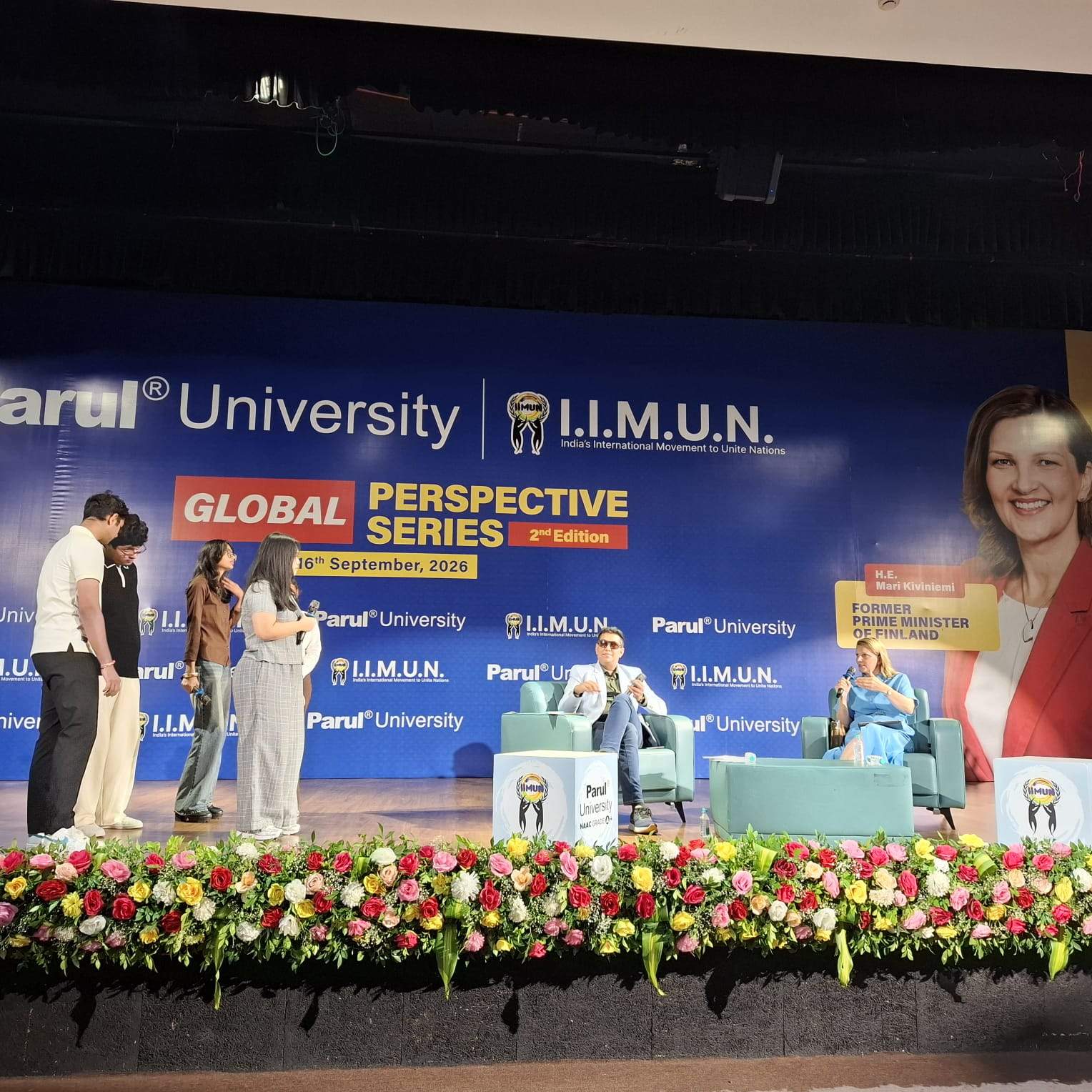
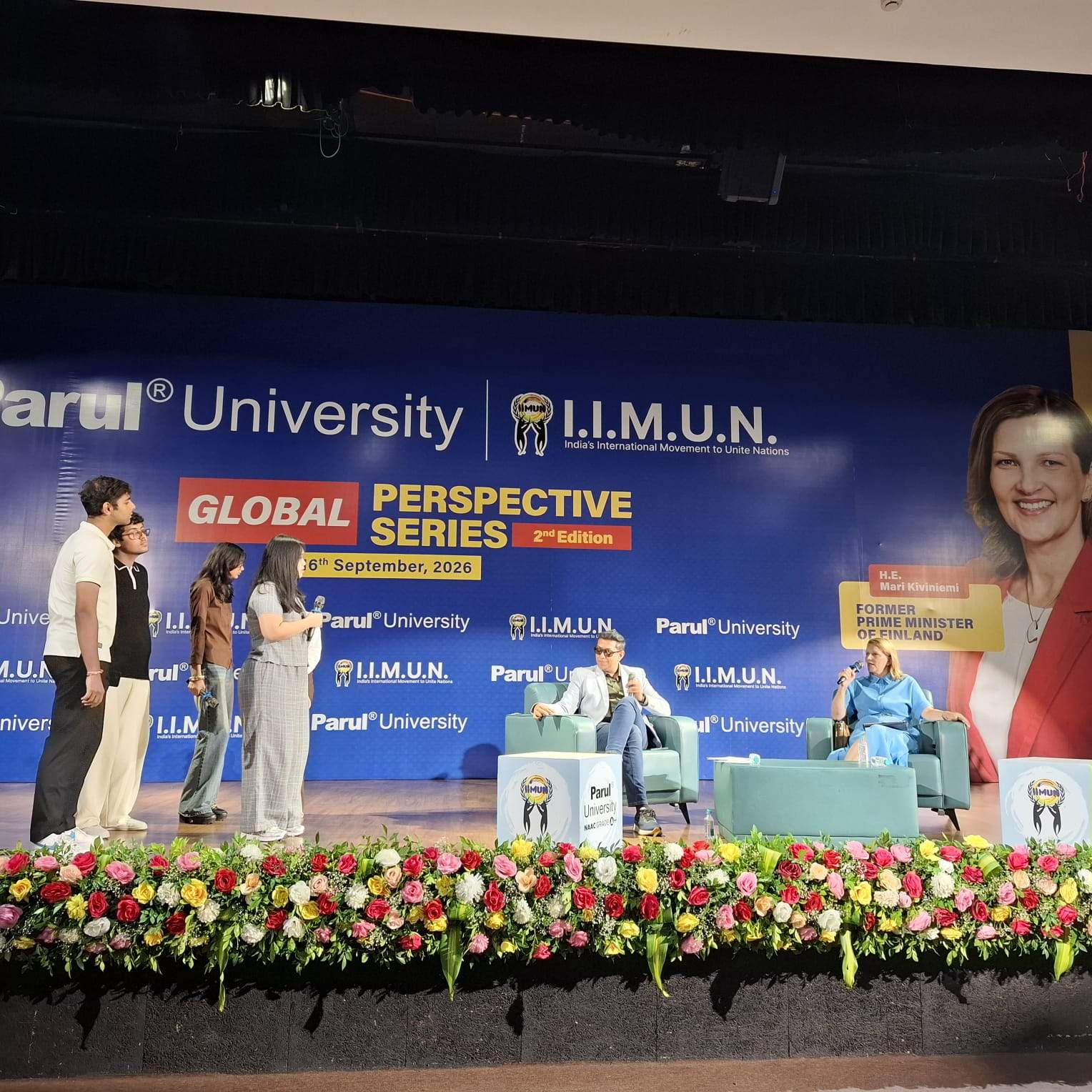
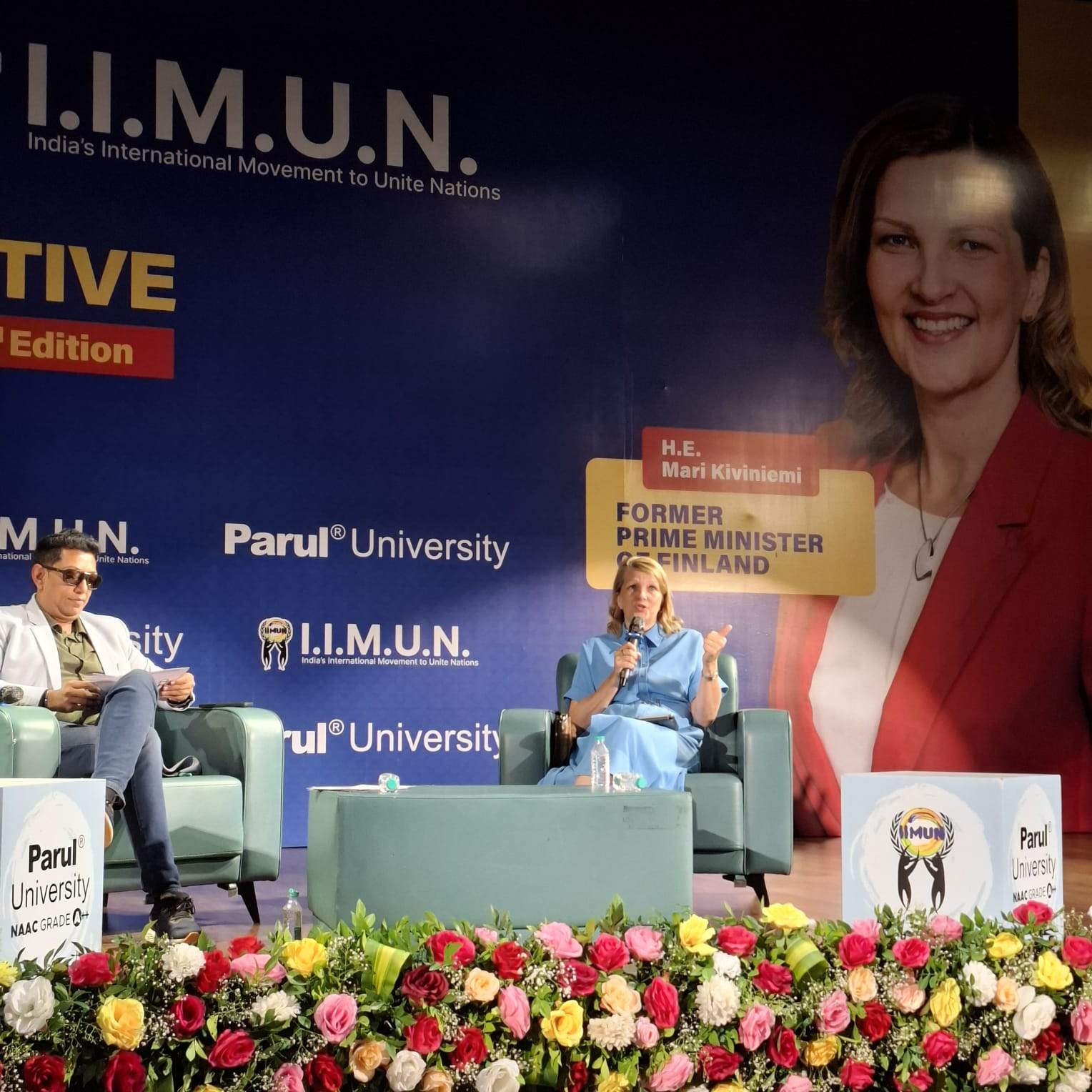
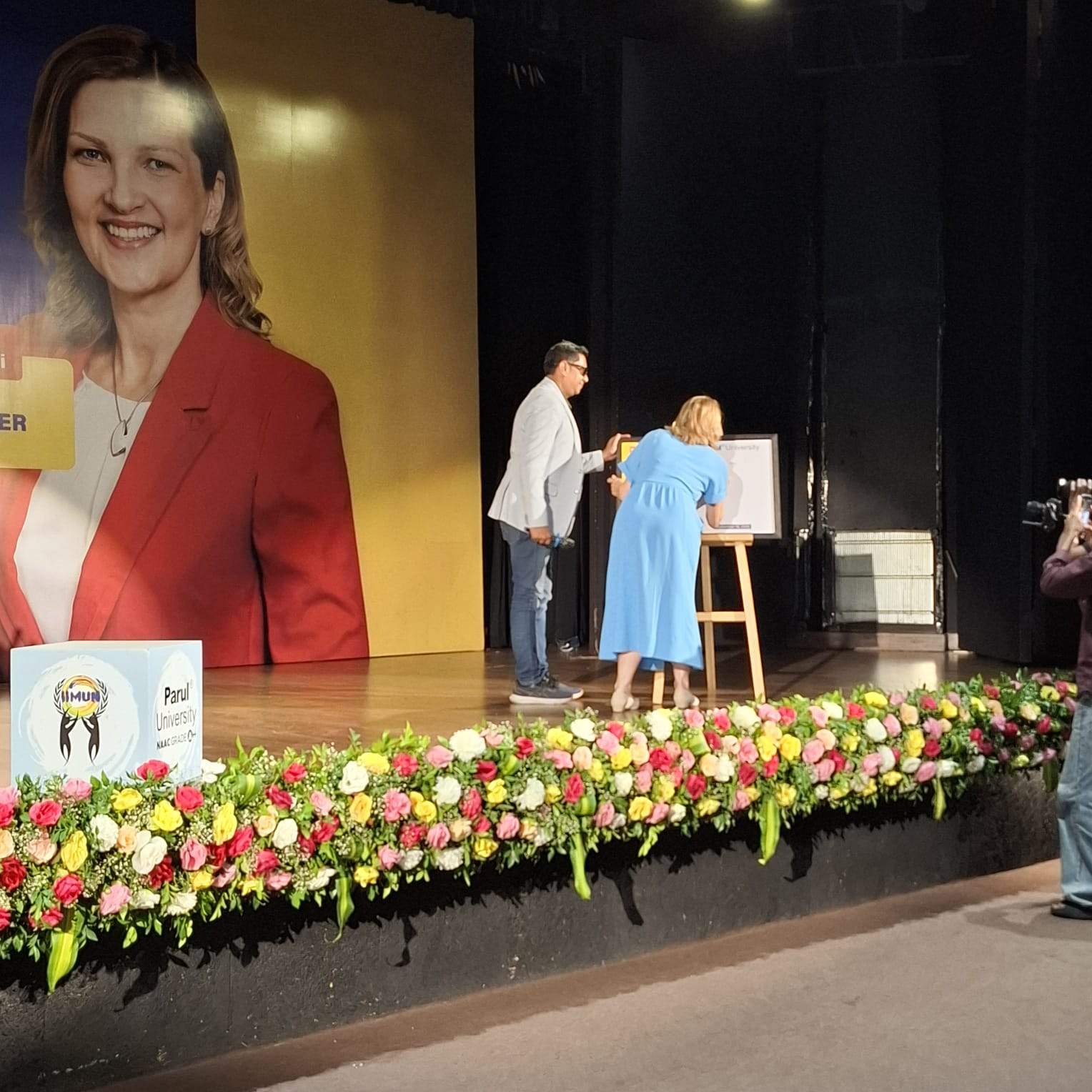
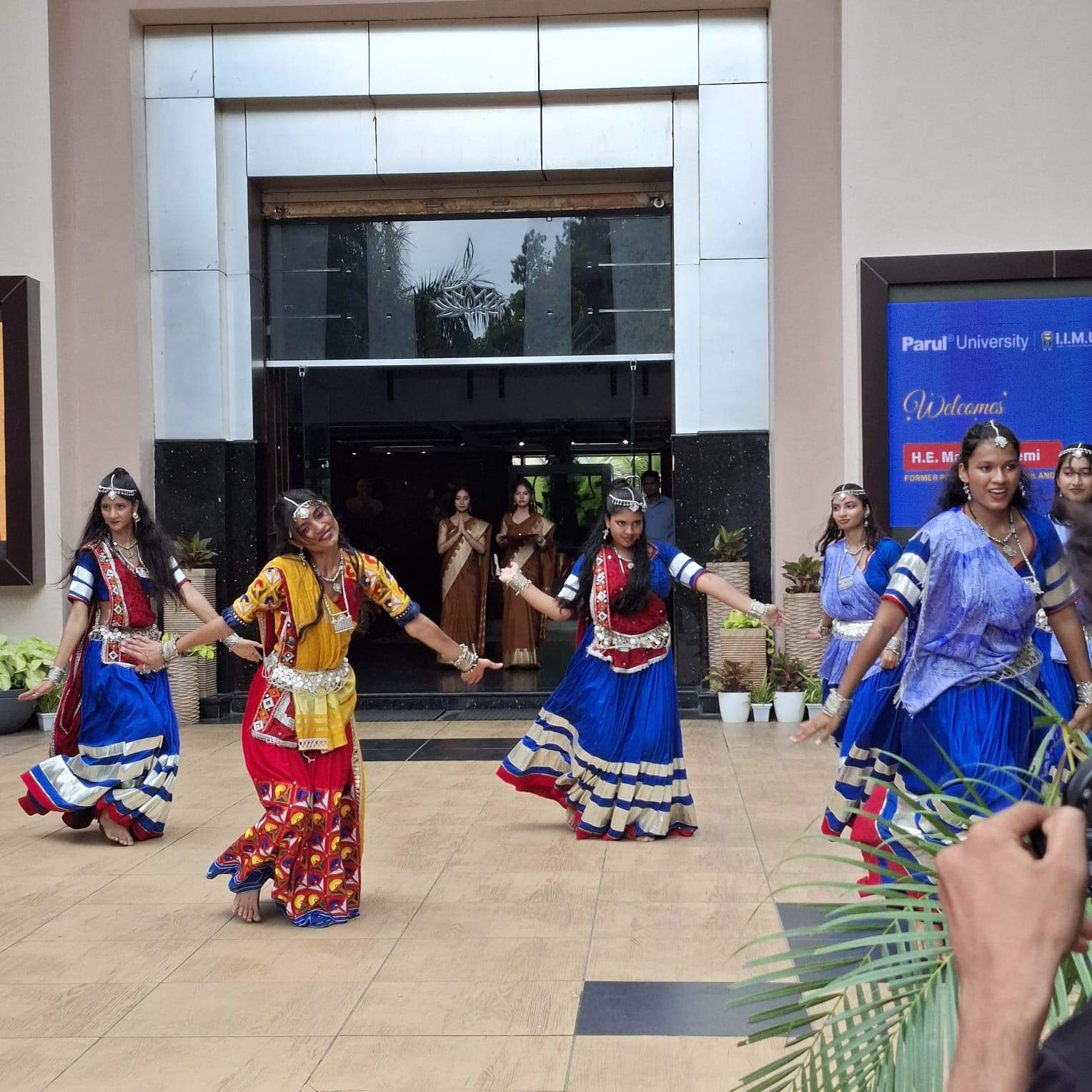
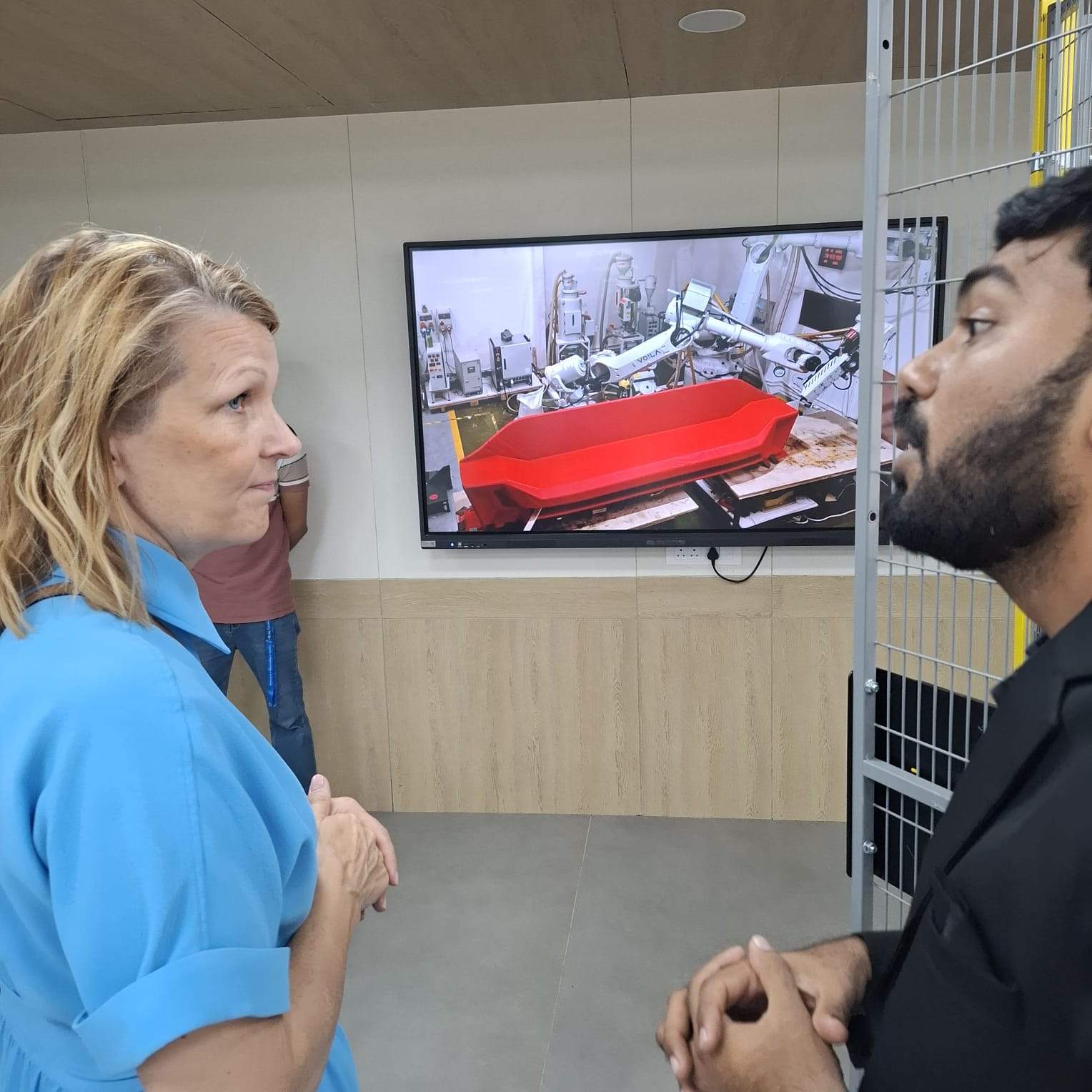
As a part of a collaboration between Club de Madrid and IIMUN, around 200 students joined a wide-ranging conversation with Club de Madrid Member and former Prime Minister of Finland Mari Kiviniemi at Parul University in India, exploring leadership, political responsibility, education, technology and the importance of developing an international outlook.
Drawing on her journey from a politically curious teenager to Finland’s highest levels of government, the former Prime Minister encouraged students to participate actively in public life and to view education as a foundation for opportunity.
“I always think that a good education is something that makes it possible for everyone to choose their own road in life,” she told the audience.
She recalled becoming involved in politics while still in high school and standing in her first election at the age of 19. Although she was not elected on that occasion, she described the experience as a first step rather than a failure. Her message to students was one of persistence: entering public life, building relationships and gaining experience can be a gradual process.
Discussing what it means to lead a country, she challenged the perception that being Prime Minister is primarily about exercising individual power. In a coalition government, she explained, leadership depends heavily on listening, negotiation and teamwork.
“As Prime Minister, you are more like the conductor of an orchestra,” she said. “Mostly, in politics and in power, it’s teamwork.”
She also reflected on the responsibility that comes with leadership, recalling the feeling of becoming “the number one person in the room” and carrying a “24/7 responsibility.” That responsibility, she said, sometimes requires governments to make difficult decisions that may be unpopular in the short term but necessary for the country over the longer term.
A lively exchange with students examined how leaders should respond when evidence supports a reform that faces significant public opposition. Her answer emphasized not only evidence-based policymaking, but communication: leaders must engage citizens, explain the reasoning behind decisions and be prepared to repeat that explanation until it is understood.
Technology and artificial intelligence were another focus of the discussion. Asked whether universities should restrict students’ use of AI, she argued that banning the technology is not the way forward. Instead, educational institutions should adapt assessments, teach students how to use AI responsibly and ensure that fundamental skills remain strong.
“AI is everywhere, and it is a technology we have to understand and use wisely,” she said, describing its potential to contribute to better outcomes when accompanied by strong literacy and critical-thinking skills.
The conversation also explored Finland’s international reputation for wellbeing. She highlighted reliable institutions, education, social support, safety and high levels of trust between citizens and institutions as important elements of Finnish society.
Concluding with a message particularly relevant to students considering careers in public policy and leadership, she stressed the value of looking beyond national borders.
“International exposure is absolutely necessary and important,” she said. In an increasingly interconnected world, she encouraged students to engage with people and ideas from different countries, take advantage of opportunities to study abroad and build international networks.
The session offered students a personal perspective on political leadership while reinforcing a broader message: curiosity, education, persistence, responsible use of technology and international engagement can equip young people to contribute meaningfully to public life. I can also adapt this into a more institutional/university-news tone or a more dynamic, student-focused news story, depending on the style of Parul University’s website.