16th September 2026, Madrid. Thirty eight former Heads of State and Government have today written an open letter to world leaders urging them to support the establishment of an International Panel on Inequality (IPI) – describing it as “a most vital institutional response for our time” – ahead of a landmark high-level side event at the UN General Assembly in September 2026.
The letter, signed by leaders from across the political spectrum and every region of the world, warns that inequality has reached record levels globally, amid high concentrations of wealth, while one in four people worldwide face food insecurity.
The leaders are Members of Club de Madrid, the world’s largest forum of democratic former Presidents and Prime Ministers.
The signatories – including former Prime Minister of Sweden Stefan Löfven, former President of Portugal Aníbal Cavaco Silva and former Prime Minister of Senegal Aminata Touré – call on current world leaders to attend the IPI’s high-level event at UNGA and support its establishment.
The leaders in the letter note that“times of historic crises birthed institutional responses, including in the founding of the United Nations itself. And an effective institutional response to inequality has long been needed.”
The proposal for an International Panel on Inequality emerged from the Extraordinary Committee on Inequality’s report to the G20, chaired by Nobel Laureate Professor Joseph E. Stiglitz. It is being championed by the UN Secretary-General and the leaders of South Africa, Brazil, Norway and Spain.
The signatories stress that there is “considerable concern that intensifying inequality indeed erodes democratic freedoms, undermining the checks and balances societies depend upon”, with studies showing that “the most unequal countries are now seven times more likely to experience democratic erosion than more equal countries”. They warn that this is a profound threat to the checks and balances that societies depend upon.
Find the full letter here
And a full list of signatories below.
Leo Varadkar, former Prime Minister of Ireland (2017-2020; 2022-2024), commented:
“An International Panel on Inequality is a welcome initiative that is carrying the support of leaders across the political spectrum and one that leaders must back today. As existing levels of inequality reach new heights, an IPI would speak to a shared concern that we risk undermining human progress, hampering economic development and fostering societal division.
‘Inequality touches all aspects of the human experience, and requires a diverse policy response as a result. An IPI would do exactly that, bringing together world leading experts in their respective fields to meet current levels of inequality in their various incarnations.”
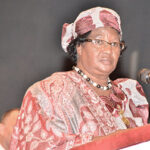
Joyce Banda, former President of Malawi, commented:
“An IPI is a much needed multilateral initiative that speaks to our times and the profound concerns of countries in the North and South. There is no question that we need far greater institutional attention on inequality at the international level – and it speaks volumes that this initiative was borne from the first G20 led by an African government.
Stefan Löfven, former Prime Minister of Sweden said:
“The inequality crisis needs policy responses – but also institutional mechanisms that can help governments bring them forward. An International Panel on Inequality can bridge this gap, ensuring that policymakers worldwide can access the best possible evidence to enable cooperation on this issue.”
To date, policymakers have lacked sufficiently comprehensive, reliable and comparable evidence on the inequality crisis. These critical evidence gaps risk seeing efforts to tackle inequality fall short.
An International Panel on Inequality would help establish a shared scientific consensus on inequality, tracking its drivers and impacts much like the Intergovernmental Panel on Climate Change (IPCC).
The panel would operate with full academic freedom, bringing together 40 leading experts alongside partner governments, civil society and multilateral institutions to serve as the world’s leading scientific authority on inequality.
Signatories:
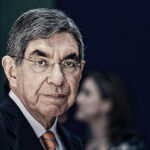
- Oscar Arias, former President of Costa Rica and Peace Nobel Laureate
- Jan Peter Balkenende, former Prime Minister of the Netherlands
- Joyce Banda, former President of Malawi
- Valdis Birkavs, former Prime Minister of Latvia
- Aníbal Cavaco Silva, former President of Portugal
- Laura Chinchilla, former President of Costa Rica and Club de Madrid President
- Helen Clark, former Prime Minister of New Zealand
- Cellou Diallo, former Prime Minister of Guinea
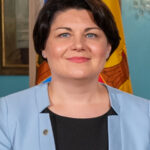
- Natalia Gavrilita, former Prime Minister of Moldova
- Paolo Gentiloni, former Prime Minister of Italy
- Dalia Grybauskaité, former President of Lithuania
- Alfred Gusenbauer, former Chancellor of Austria
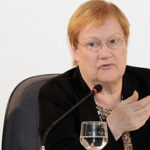
- Tarja Halonen, former President of Finland
- Han Seung-soo, former Prime Minister of South Korea and Club de Madrid Vice-President
- Ivo Josipovic, former President of Croatia
- Mari Kiviniemi, former Prime Minister of Finland
- Aleksander Kwaśniewski, former President of Poland
- Ricardo Lagos, former President of Chile
- Yves Leterme, former Prime Minister of Belgium
- Stefan Löfven, former Prime Minister of Sweden
- Moussa Mara, former Prime Minister of Mali
- Rexhep Meidani, former President of Albania
- James Michel, former Prime Minister of the Seychelles
- Olusegun Obasanjo, former President of Nigeria
- Roza Otunbayeva, former President of Kyrgyzstan
- George Papandreou, former Prime Minister of Greece
- Jean Pierre Raffarin, former Prime Minister of France
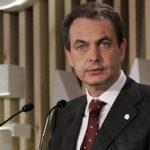
- José Luis Rodríguez Zapatero, former Prime Minister of Spain
- Petre Roman, former Prime Minister of Romania
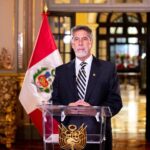
- Francisco Sagasti, former President of Peru
- Katerina Sakellaropoulou, former President of Greece
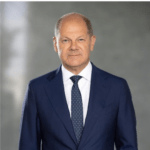
- Olaf Scholz, former Chancellor of Germany
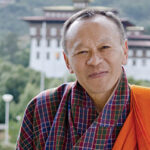
- Jigmi Thinley, former Prime Minister of Bhutan
- Aminata Touré, former Prime Minister of Senegal
- Danilo Türk, former President of Slovenia
- Cassam Uteem, former President of Mauritius
- Leo Varadkar, former Prime Minister of Ireland
- Susilo Bambang Yudhoyono, former President of Indonesia
ENDS
Notes to Editors
About an International Panel on Inequality
An International Panel on Inequality (IPI) would serve as the world’s leading scientific authority on inequality, providing policymakers, the private sector and civil society with deeper insights and a stronger shared understanding of the scale of the inequality crisis and how to tackle it.
Inspired in part by the success of the Intergovernmental Panel on Climate Change (IPCC), an IPI draws attention to the fact that high inequality is an issue of global importance, akin to climate change.
The proposed panel would be anchored in neutral, science-based and objective analysis. It would systematically track inequality trends, consolidate fragmented research on the drivers and consequences of inequality, identify critical gaps in our knowledge, and evaluate the impacts of policy choices at both global and national levels.
You can find the initial recommendation for an International Panel on Inequality in the Extraordinary Committee on Inequality’s Report to the G20.
The initiative is now being led by Nobel Laureate, Professor Joseph E. Stiglitz and the founding governments of South Africa, Spain, Norway and Brazil.
You can find more about the proposal for an International Panel on Inequality in the two-pager attached.
About Club de Madrid
Club de Madrid is the world’s largest forum of democratic former Presidents and Prime Ministers, who leverage their individual and collective leadership experience and global reach to strengthen inclusive democratic practice and improve the well-being of people around the world.
As a non-partisan and international non-profit organisation, it counts on the hands-on governance experience of more than 130 Members from over 70 countries, along with a global network of advisers and partners across all sectors of society.
This unique alliance fosters dialogue, builds bridges and engages in advocacy efforts to strengthen public policies and effective leadership through recommendations that address challenges such as inclusion, sustainable development and peace, at the national and international levels.