The current international landscape is defined by growing geopolitical fragmentation, marked by economic tensions, widening development gaps, and a sustained decline in human progress indicators. Inequalities between countries are increasing, the post-pandemic recovery remains uneven, and polarization is eroding trust in institutions and multilateral agreements, weakening the collective capacity to respond to shared challenges such as climate change, persistent inequality, unregulated digital transitions, and economic volatility. This increasingly volatile and less cooperative environment underscores the need to move toward more inclusive approaches, renewed financial mechanisms, and forms of multilevel governance capable of addressing challenges that no country can tackle alone. In this context, the importance of reinvigorating mechanisms for interregional understanding and expanding spaces for political dialogue is reaffirmed as essential pathways to articulating minimally coordinated responses to systemic tensions that require shared solutions.
Amid these systemic changes, Ibero-America holds a strategic position, grounded in a community of shared values—democracy, human rights, cooperation, and sustainable development—that grant it a distinctive political identity and a recognized capacity to build consensus. This internal cohesion, together with its dual anchoring between Europe and Latin America, positions the Ibero-American Community as an actor capable of contributing strategic visions and collective proposals within a reconfiguring international system. For this very reason, it is essential to broaden its international outreach toward Africa and Asia and to strengthen its ties with Europe and the Americas—not only to diversify partnerships and enhance its global engagement, but also to consolidate its role as a benchmark for political cooperation and as a bridge-building space in an international environment that demands greater dialogue, coordination, and convergence among regions.
A Global Perspective on the Role of Ibero-America
The event “Looking Toward Ibero-America” is conceived as a space for strategic reflection on how other regions perceive the Ibero-American space in a fragmented world and how the region can project its voice, capacities, and priorities in the current global context. It seeks to analyze how Ibero-American perspectives align with recent international dynamics, such as transformations in the financial architecture, the implementation of the Pact for the Future, the climate negotiations of COP31, and the urgency of revitalizing inclusive and effective international cooperation. It also aims to highlight areas in which Ibero-America is developing joint capacities, including gender equality, sustainable development, digital rights, and social cohesion, among others.
The experience accumulated through processes such as the Ibero-American Summits, regional cooperation strategies, and the progressive construction of a principles- and rights-based digital agenda reinforces its potential to contribute to global governance from a solid normative and
cooperation-oriented perspective. How do Europe, Asia, or Latin America view Ibero-America’s capacity to influence global debates? What expectations exist regarding its role in multilateral reforms, ecological transitions, and digital governance frameworks? This reflection exercise is the result of collaboration between the Ibero-American General Secretariat (SEGIB) and Club de Madrid, an international association bringing together more than 130 former democratic Heads of State and Government from over 70 countries worldwide, as well as a global network of advisors and partners.
A Space for Strategic Dialogue
The event “Looking Toward Ibero-America” will take place within the framework of the High Level Policy Dialogue that Club de Madrid organizes annually. The 2026 edition will be held in June in Madrid. This collaboration offers a unique opportunity by convening political leaders and renowned
experts from diverse regions, whose geographic diversity enables the incorporation of perspectives from Africa, Asia, Europe, and the Americas—enriching strategic deliberation and strengthening the international projection of the Ibero-American Community. The expected audience will include former democratic Heads of State and Government, experts, academics, think tanks, international organizations, civil society, and private sector representatives, convened by both Club de Madrid and SEGIB.
Objectives
- To outline the current state of relations between Ibero-America and other regions.
- To highlight Ibero-America’s geopolitical and normative importance in a fragmented world.
- To expand the international projection of the Ibero-American Community.
- To contribute to the dissemination of the priorities of the Madrid Ibero-American Summit
- To link the Community’s strategic priorities with cutting-edge global debates promoted by Club de Madrid.
- To strengthen multilateral forums as spaces for seeking solutions to global challenges.
Expected Outcomes
The debate is expected to generate inputs that:
- Improve knowledge among political leaders and specialists about the Ibero-American Community and its international projection.
- Reinforce the need for strategic relationships between the region and partners from other parts of the world, based on shared values and cooperative approaches.
- Promote dialogue on the future of multilateralism.
Venue
CentroCentro (Palacio de Cibeles) – Pl. Cibeles, 1, Retiro, 28014 Madrid, Spain
A conversation among
- Jyoti Thottam Editor and Writer at The New York Times (Master of Ceremonies)
- Andrés Allamand, Ibero-American Secretary-General
- Aminata Touré, Prime Minister of Senegal (2013–2014) and Club de Madrid Member
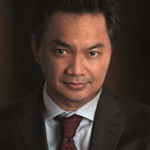
- Dino Patti Djalal, Founder, Foreign Policy Community, Indonesia and Club de Madrid Advisor
- Dominique de Villepin, Prime Minister of France (2005–2007) and Club de Madrid Member (TBC)