This high level event brought together policy makers, donors, influential leaders, academia, government and civil society to promote discussion on the impact of education and other social services on social division and violent conflict and raise awareness of how social services can make meaningful contributions to peacebuilding and the advancement of the concept of ‘shared societies’.
A holistic approach to peacebuilding was brought up throughout the discussions due to the changing nature of conflict. If old paradigms of conflict are to be changed, there is the need to use conflict lenses to adapt social services in conflict States (by developing the psycho social side of education for instance), as they are an important element for stabilization.
Addressing the root causes of conflict is crucial as the international community cannot cope with the human and financial consequences of it, and to do that, investing in Security and Rule of Law is key. Promoting national curricula for inclusion in young or divided nations such as South Sudan was also mentioned as a tool to build shared societies.
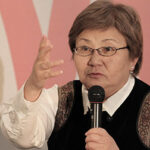
President Otunbayeva shared her experience as former President of Kyrgyzstan and highlighted the importance of peacebuilding via language education and children’s education, promoting the importance of multilingual education to create opportunities and build shared societies. Ebrahim Rasool raised the idea of using data to inform policies for peacebuilding. He stated that in those parts of the world where there is less resources and less of an appetite for war, we need to seize the moment to build peace and shared societies. Kinga Göncz addressed the different approaches needed to encourage political leaders to take action in their own country and encouraging the donor community to provide support in promoting social services for peace building.
The speakers included:
- Joost Andriessen – Director, Peacebuilding and Stabilization, Ministry of Foreign Affairs, Netherlands
- Yoka Brandt – UNICEF Deputy Executive Director
- Kinga Göncz, former Minister for Foreign Affairs, former Euro parliamentarian, Member of the Club de Madrid’s NetPLUSS
- Mari Malek, model and activist, former refugee from South Sudan
- H.E. Maker Mwangu Famba – Minister of Education, Democratic Republic of Congo
- Roza Isakovna Otunbayeva – Former President of Kyrgyzstan and member of the Club de Madrid
- Ebrahim Rasool, former Premier of Western Cape in South Africa, Member of the Club de Madrid’s NetPLUSS
Click here for the full agenda
The event links directly to UNICEF’s Strategic Plan to strengthen the resilience of children, caretakers and community systems through conflict-sensitive programming and peacebuilding. Lessons learned from two innovative peacebuilding initiatives – the Shared Societies Project from the Club de Madrid and UNICEF’s Peacebuilding, Education and Advocacy programme – Learning for Peace – will be discussed and shared to inform future programming.
Conflict remains a feature of the lives of too many people around the world. We know that peace, stability and an inclusive shared society allow for economic progress and increased wellbeing. As world leaders work out the details of the Sustainable Development Goals – a roadmap for human progress over the next 15 years – we are at a critical moment to create momentum for innovative approaches to education and other social services designed to build more peaceful and resilient societies.