The Global Comission on Democracy and Multilateralism
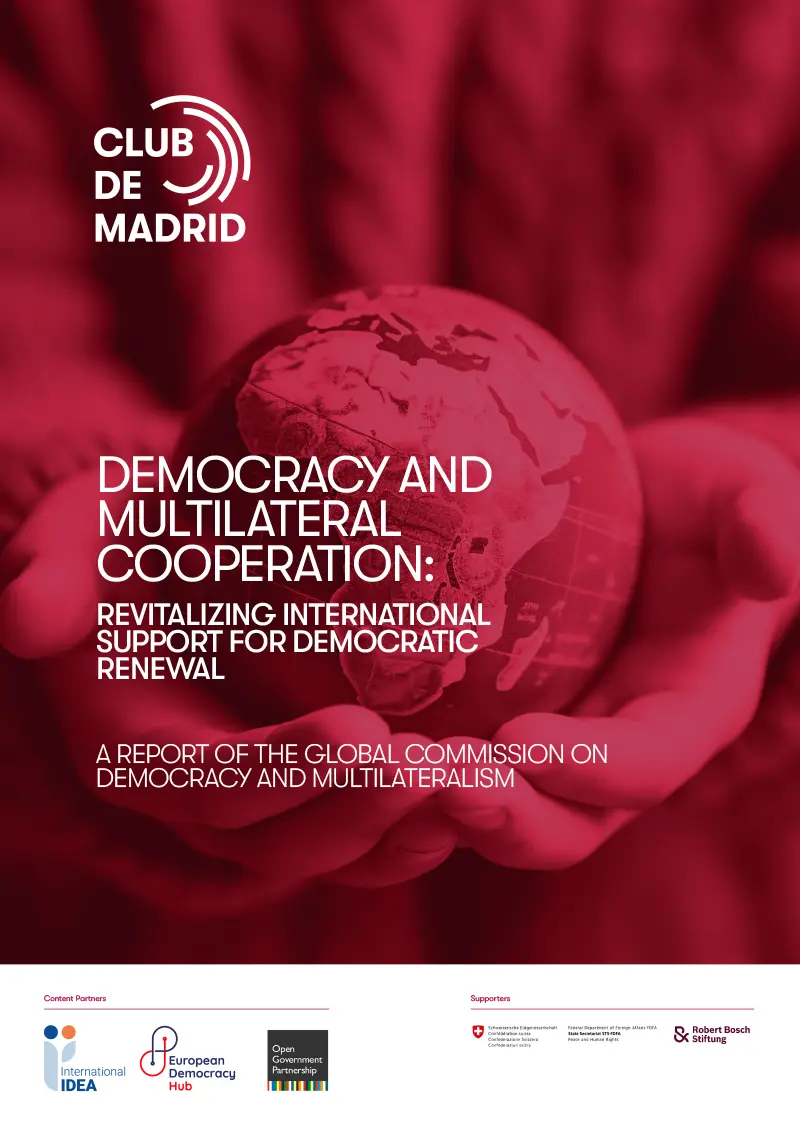
Club de Madrid convened the Global Commission on Democracy and Multilateralism to examine how multilateral cooperation can help protect, strengthen and renew democracy. The Commission was established at a time when democratic institutions and public trust are under pressure, while multilateral cooperation is weakening despite the need for collective action on global challenges. Its work also explored how stronger, more responsive democracies can help sustain and renew the multilateral system.
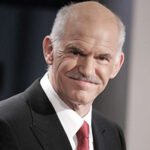
Chaired by George Papandreou, Prime Minister of Greece (2009-2011), the Commission brought together nineteen members from all regions and a range of political, institutional and professional backgrounds. Its Vice-Chairs were Kevin Casas-Zamora, Secretary-General of International IDEA, and Aminata Touré, former Prime Minister of Senegal (2013-2014). The Commissioners included former Presidents and Prime Ministers Michelle Bachelet, Laura Chinchilla, Dalia Grybauskaitė, Stefan Löfven, Danilo Türk, Francisco Sagasti and Mokgweetsi Masisi, alongside Martín Abregú, Elizabeth Cousens, Dino Patti Djalal, Aidan Eyakuze, Obiageli “Oby” Ezekwesili, Stephen B. Heintz, Věra Jourová, Susana Malcorra and Pratap Bhanu Mehta. Together, they brought experience from international organisations, civil society, philanthropy and academia.
Ted Piccone served as the Commission’s Content Director. Its substantive work was organised through three expert Working Groups, led by its main content partners: International IDEA, the European Democracy Hub and the Open Government Partnership. They examined three complementary levels of cooperation: the United Nations system, regional organisations and plurilateral initiatives. Over the course of a year, the Working Groups reviewed research, consulted experts and practitioners, and developed proposals for strengthening democratic cooperation. Their reports are published alongside the Commission’s main report. The initiative was made possible with support from the Ford Foundation, the Robert Bosch Stiftung and the Swiss Federal Department of Foreign Affairs.
The report examines how cooperation at global, regional and plurilateral levels can work together to strengthen democracy at a time of democratic retrenchment and declining trust. It puts forward four broad directions for action: supporting democracy that delivers both tangible improvements in people’s lives and the guarantees of freedom, dignity and justice; democratising multilateral decision-making; investing strategically in plurilateral cooperation; and addressing the concentration of economic, technological and political power. It also develops recommendations across five thematic priorities: digital technologies and artificial intelligence; constitutions, checks and balances and the rule of law; electoral integrity; corruption; and equality and civil rights. The report is intended as a basis for continued engagement, advocacy and reform.