About the Global Comission
The Global Commission on Democracy and Multilateralism, convened by Club de Madrid, brings together former Heads of State and Government and senior leaders from international organisations, civil society, philanthropy and academia to examine a central challenge for today’s international order: how multilateral cooperation can better protect, strengthen and renew democracy. It also asks how stronger democracies can in turn reinforce the legitimacy, effectiveness and accountability of multilateral institutions.
The Commission was established against the backdrop of two mutually reinforcing trends: sustained democratic erosion across regions, and growing pressure on the multilateral system as a framework for collective action. Its work has therefore focused not on abstract institutional reform, but on identifying practical and politically viable ways to strengthen international support for democratic resilience in a more fragmented and contested global environment.
Following a year of consultations and deliberations, the Commission has now completed its final report, Democracy and Multilateral Cooperation: Revitalizing International Support for Democratic Renewal, which goes beyond diagnosis to offer forward-looking proposals grounded in policy relevance, political feasibility and institutional innovation.
The report examines how cooperation at global, regional and plurilateral levels can work together to strengthen democracy. It puts forward four broad directions for action: supporting democracy that delivers tangible improvements in people’s lives, as well as freedom, dignity and justice; democratising multilateral decision-making; investing strategically in plurilateral cooperation; and addressing the concentration of economic, technological and political power. It also develops recommendations across five thematic priorities: digital technologies and artificial intelligence; constitutions, checks and balances and the rule of law; electoral integrity; corruption; and equality and civil rights. The report is intended as a basis for continued engagement, advocacy and reform.
Commission Structure and Process Diagram
|
Why it matters
Democracy and multilateralism are both facing profound challenges, and each is weakened at the moment it most needs the other.
Democratic institutions are under pressure around the world, public trust in them is falling, and the gap between citizens and those who govern continues to widen. The multilateral system is strained and, on the gravest questions, often paralysed, drained of political and financial support by some of the powers that built it, and weakened by the selective application of its own rules, which have too often bound the vulnerable while sparing the powerful.
Democracy needs effective multilateral cooperation to help manage the cross-border and domestic pressures that shape people’s lives and how they govern themselves. Multilateralism, in turn, needs strong democracies to uphold rules, defend rights, sustain public trust in cooperation, and ensure that democratic principles are reflected in the institutions through which states act together. Neither can be fully renewed without the other.
Yet the interdependence between them has received insufficient policy attention. This Commission was created to address that gap, proposing politically viable recommendations that can make the United Nations, regional organisations and plurilateral initiatives more effective in upholding democracy.
Methodology
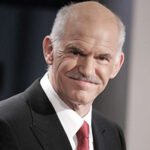
Chaired by George Papandreou, Prime Minister of Greece (2009–2011), the Commission brought together 19 High-Level Commissioners, including Members of Club de Madrid – democratic former Heads of State and Government – and other internationally recognised leaders with extensive experience in democratic governance and multilateral affairs.
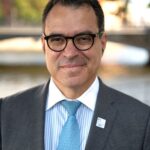

Its Vice-Chairs were Kevin Casas-Zamora, Secretary-General of International IDEA, and Aminata Touré, former Prime Minister of Senegal (2013–2014). The Commissioners included former Presidents and Prime Ministers Michelle Bachelet, Laura Chinchilla, Dalia Grybauskaitė, Stefan Löfven, Danilo Türk, Francisco Sagasti and Mokgweetsi Masisi, alongside Martín Abregú, Elizabeth Cousens, Dino Patti Djalal, Aidan Eyakuze, Obiageli “Oby” Ezekwesili, Stephen B. Heintz, Věra Jourová, Susana Malcorra and Pratap Bhanu Mehta. Together, they brought experience from international organisations, civil society, philanthropy and academia.
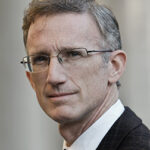
Ted Piccone served as the Commission’s Content Director. Its substantive work was organised through three expert Working Groups, each made up of around 15 experts from across sectors and regions. Members included representatives of multilateral organisations, academia, civil society and leading policy institutions. Each group examined a critical dimension of the democracy–multilateralism nexus and produced a policy paper that supported the Commission’s final report. The Working Groups were led by the Commission’s content partners: International IDEA examined support for democracy within the United Nations system; the European Democracy Hub focused on regional mechanisms; and the Open Government Partnership explored the potential of plurilateral cooperation.Over the course of a year, the Working Groups reviewed research, consulted experts and practitioners, and developed proposals for strengthening democratic cooperation. Their reports are published alongside the Commission’s main report. The initiative was made possible with support from the Ford Foundation, the Robert Bosch Stiftung and the Swiss Federal Department of Foreign Affairs.